Saturday, January 29, 2011

Responsibility and Debt in August Wilson’s “Fences”

 A STUDY OF TROY MAXSON


Troy Maxson’s life is all about recognizing responsibility.  It’s that big word that turns his life around.  It puts the brakes on his life of crime, gets him to find a decent job with the sanitation department, a decent home and a decent family.  With all these in place, he forms very definite views on who owes what and to whom. The baseball team had owed him a place in it; his father had owed him care.  His employer, Mr. Rand, owes him a driver’s job. Cory, his son, owes him obedience and Troy owes him responsibility, and finally, he even thinks he owes himself an affair.  Where did it all go wrong for him?  In his wife Rose’s words, “You always talking about what you give… and what you don’t have to give.  But you take too.  You take…and you don’t even knownobody’s giving !” (II, i; page 71)
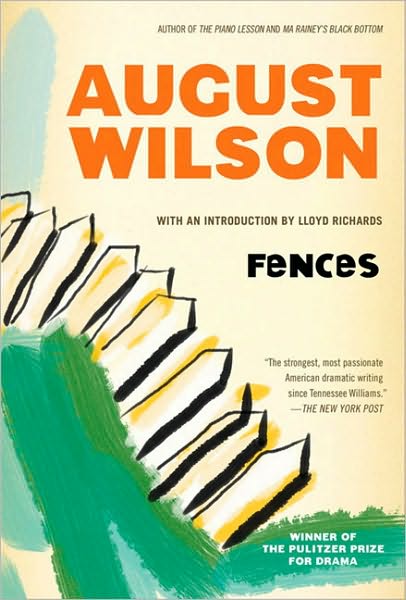
As long as he is battling racism, an outside enemy, the audience is proud to know Troy.  His fight with the management and the subsequent promotion from a garbage lifter to a garbage truck driver (a position heretofore reserved for the whites) is the fulfillment of the Black American dream.  They may have kept him out of the baseball leagues (although age more than race might have been a factor) but he sure bounces back with this victory.  The audience is also proud of Troy for leaving a life of crime and for his firm views on duties and responsibilities. “I done learned my mistake and learned to do what’s right by it.  You still trying to get something for nothing.  Life don’t owe you nothing.  You owe it to yourself”, he lectures his older son Lyons. (I,i; page18)  The audience falls in love with his energy, vitality, his stories and his endearing family and friends. Troy jokingly claims he keeps the devil away by paying him ten dollars a month.  That clinches the connection the audience has with him.  Not only is he now an upright citizen he is also a god-fearing man doing the best he can to take care of his family.


Read more »

Tuesday, May 18, 2010

"My Life and Hard Times" by James Thurber

It's really difficult to finish James Thurber's books.  Almost impossible to read even one chapter at a sitting.  By the end of the first paragraph, I am laughing so hard I just cannot continue.  "My Life and Hard Times" was my Mothers Day gift and it is such a treasure.

The book was written by a middle-aged Thurber but of events that  took place before he was 25.  "The sharp edges of old reticences are softened in the autobiographer by the passing of time--a man does not pull the pillow over his head when he wakes in the morning because he suddenly remembers some awful thing that happened to him fifteen or twenty years ago, but the confusions and the panics of last year and the year before are too close for contentment", he explains.Thurber had the unique ability to bring out the humor in what must have been the most painful situations in his young life. The years at Ohio State University seem to be tinged with disappointment because that was when he was made painfully aware of his handicap--he just did not have great eyesight. At age 7, he had lost one eye while playing "William Tell" with arrows and the other through "sympathetic opthalmia". He couldn't look through microscopes, he could not participate in gym and he could not enlist in the army.  Although he recalls with amusement his weekly visits to the draft board medical examiners, the reader can detect a growing disappointment  in him as he kept getting rejected and a subsequent relief when the armistice was called.

Thurber's early life was a revolving door to bewildering eccentrics.  I wonder how much he laughed reminiscing about the Get-Ready Man "a lank unkempt elderly gentleman with wild eyes and a deep voice who used to go about shouting at people through a megaphone to prepare for the end of the world. 'Get ready! Get read-y!' he would bellow, 'The Worllld is coming to an End!'"  Somehow the man got mixed up with a production of "King Lear" and while the protagonist wandered blindly through a storm with Edgar, the Get Ready man added to the mayhem..King Lear would have lent a helping hand to fulfil GRM's dire predictions.

Blow, winds, and crack your cheeks! Rage! Blow!
You cataracts and hurricanoes, spout
Till you have drench'd our steeples, drown'd the cocks!  (King Lear, Act III, scene ii)

I think the play would have lost its appeal once the old gentleman was ejected.
Read more »

Sunday, May 16, 2010

"Midaq Alley" by Naguib Mahfouz

I start my new blog with a review of a novel by Naguib Mahfouz, Nobel Prize winner for Literature in 1988.  Midaq Alley was one of his early novels set during the Second World War.  The novel is about the residents in Midaq Alley, an impoverished part of Cairo city. The World War has wrought changes in the city: It  brought electricity (the new radio in Kirsha's cafe), it brought money (mercenary soldiers) and it brought a collapse of the traditional value systems.  And no one in Midaq Alley escapes these influences. There is no single protagonist in this novel, but one dominant theme--self-indulgence at any cost. It is no wonder then that these people face the tragic consequences of their desire for money and sensual pleasures.  Critics claim that the novel is about the conflict between the past and the present and the ever changing value system.  But I disagree.  It is about human failings, and about overreach.
Midaq Alley is home to Kirsha's cafe , Uncle Kamil who has a sweet shop,  Abbas the barber, the baker Jaada and his wife Husniya, Umm Hamida a marriage broker and her foster daughter Hamida, Zaita a beggar maker, a "dentist" Dr. Bushi, Salim Alwan a perfume merchant and Mrs.Saniya Afifi the landlady.

Of these, Hamida occupies quite a large role in the book. An adopted daughter, growing up in a lower middle class environment, she feels no particular attachment to her mother or to any of her neighbors.  She dreams of wealth and control over men.  She knows she is attractive and wants to ensnare the right kind of men--those that are rich and powerful.   Initially, she latches on to Abbas the barber, as a stop gap solution no doubt caught in his enthusiasm and his earnest promise to earn more money.  But visions of slaving over a hot stove, leading the dull life of a housewife with nothing but the next pregnancy to look forward to, quickly cures her of her love for Abbas.  While the naive Abbas is away in the army making an honest living, she transfers her attention to the rich Salim Alwan who is lusting for her anyway.  A freak heart attack forces Salim out of her life and into a life of an invalid.  However, that works in Hamida's favor too because she now realizes that prostitution is her calling; she is a "whore by instinct"(205).  Seduced by the pimp Ibrahim Faraj she embarks on her new fulfilling career.  She will not be completely happy, though, till she has subjugated the pimp and given herself emotional power over him.  She appeals to Abbas,   Now a rejected, angry and jealous suitor, he agrees to defend her "honor" only to learn that her honor has been bought and sold several times to the British soldiers.  Totally out of control with rage and frustration, Abbas hurls a beer bottle at her face wounding her.  He is beaten to death by the  soldiers.

Read more »